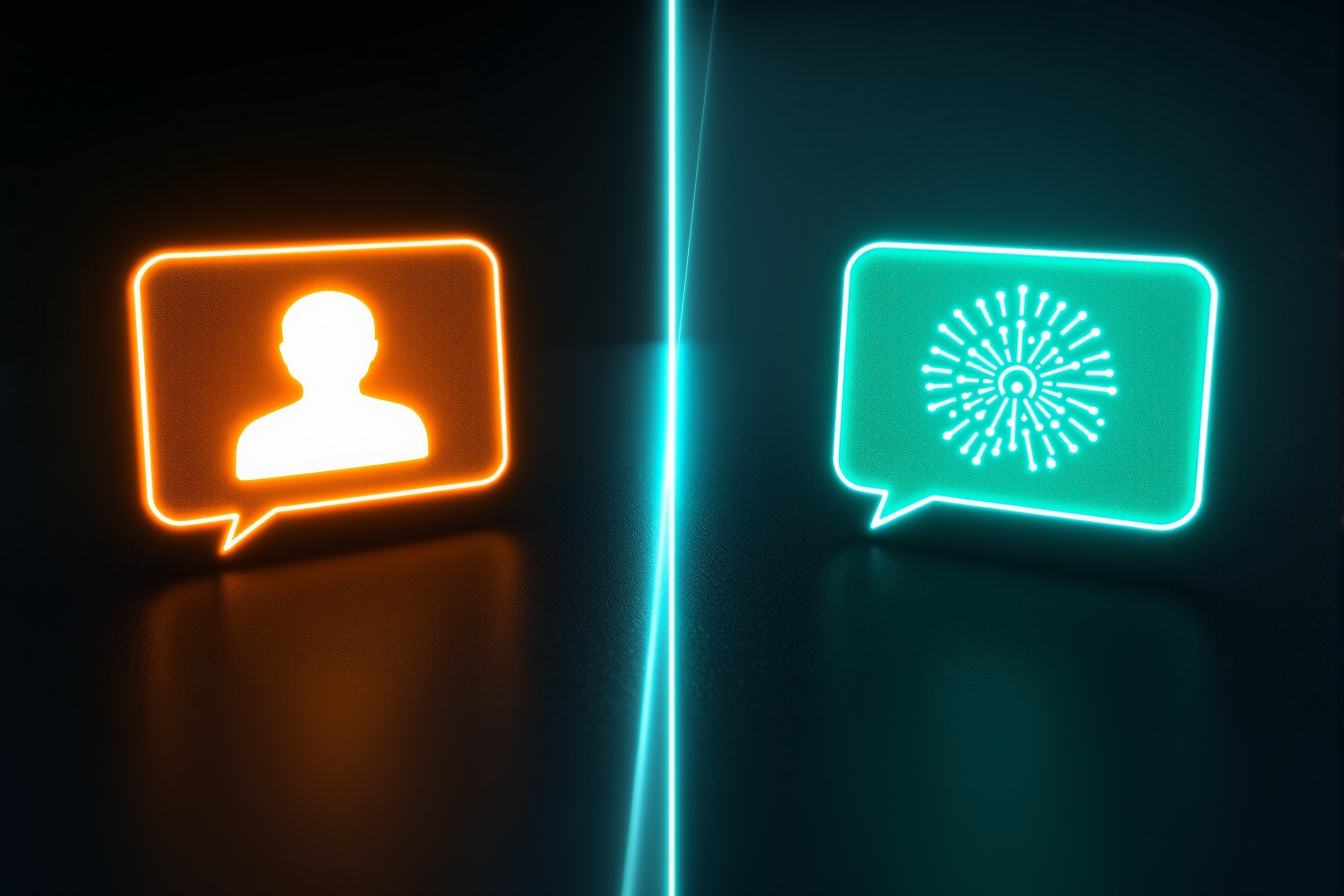
For years, the debate has been: AI chatbots are fast but robotic, while live chat is personal but slow. But the latest generation of AI chatbots — powered by large language models — has blurred that line almost completely. We ran a head-to-head comparison across 50+ businesses and the results might change how you think about customer communication.
The Setup
We split participating businesses into two groups. Group A used traditional live chat with human agents during business hours, falling back to a basic contact form after hours. Group B deployed our AI chatbot solution with human handoff capability for complex scenarios. Both groups tracked the same metrics over a 90-day period.
The Results
| Metric | Live Chat | AI Chatbot |
|---|---|---|
| Average Response Time | 47 seconds | < 1 second |
| Lead Capture Rate | 12.4% | 18.7% |
| After-Hours Conversion | 2.1% | 16.3% |
| Customer Satisfaction | 4.2 / 5 | 4.4 / 5 |
| Monthly Cost (avg) | $3,200 | $400 |
Why the AI Chatbot Won
The biggest factor was immediacy. When a visitor lands on your site and has a question, they want an answer right now — not in 47 seconds, not during business hours. The AI chatbot engages instantly, qualifies the lead, and if needed, smoothly hands off to a human agent. By the time a human enters the conversation, the bot has already gathered context, so the handoff feels seamless to the customer.
The after-hours difference was particularly dramatic. Businesses using only live chat were effectively closed for 16 hours a day and all weekend. The AI chatbot turned those dead hours into a 16.3% conversion engine.
The Bottom Line
AI chatbots aren’t replacing human agents — they’re making them dramatically more effective by handling the repetitive work and keeping the conversation going when humans aren’t available. The best setup is a hybrid: AI handles first contact and qualification, humans step in for complex or high-value conversations.
Want to see what an AI chatbot looks like on your site? Check out our AI chatbot solutions.